
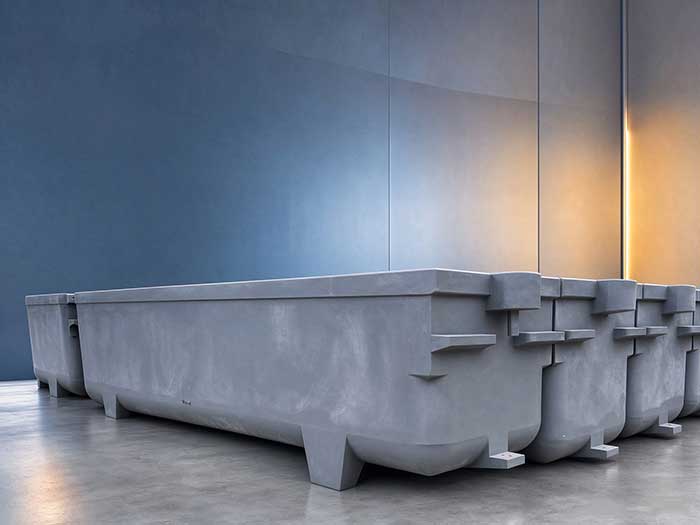
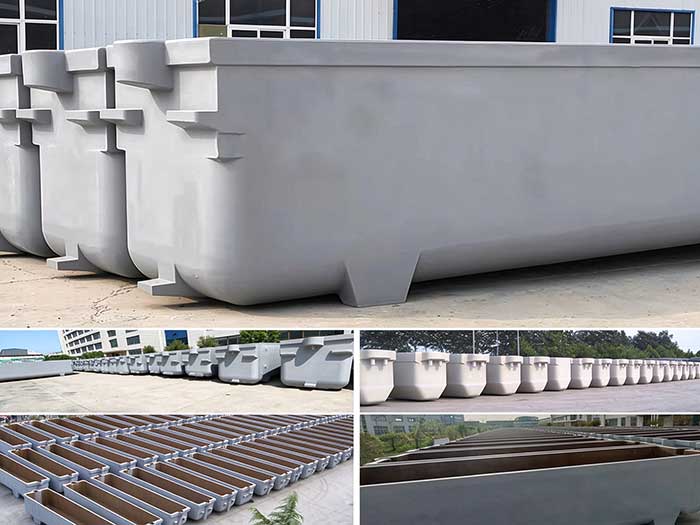
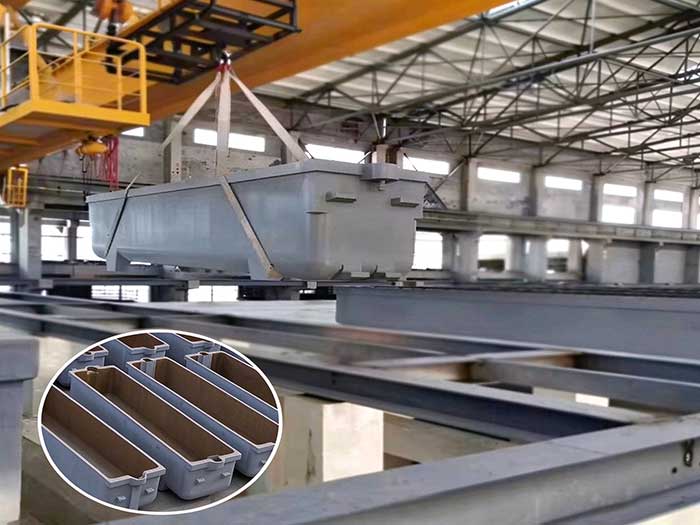
FRP Electrolytic Cell is manufactured with fiberglass‑reinforced plastic composite material by integral moulding. It serves as core tank equipment for hydrometallurgy, electroplating and metal refining under aggressive acid‑alkali electrolyte service conditions.
FRP Electrolytic Cell is manufactured with fiberglass‑reinforced plastic composite material by integral moulding. It serves as core tank equipment for hydrometallurgy, electroplating and metal refining under aggressive acid‑alkali electrolyte service conditions.
Designed for complex electrolyte environments, the product delivers balanced performance in corrosion resistance, structural strength, electrical insulation and leak‑proof sealing. Custom non‑standard dimensions are available to satisfy on‑site installation and production requirements of various projects. OEM & ODM services are supported.
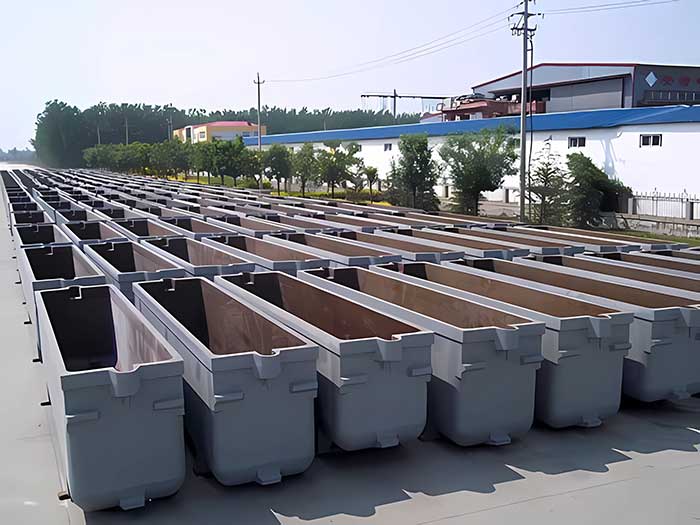
Applicable Industries
Non‑ferrous metal electrolysis (electrowinning & electrolytic refining for copper, zinc, manganese, nickel, cobalt, etc.)
Electroplating industry
Hydrometallurgical chemical processes
✅ Acid & Alkali Corrosion Resistance
Anti‑corrosion resin liner is adopted to accommodate acidic and alkaline electrolytes. Dense material structure reduces medium permeation risk for harsh chemical service environments.
✅ Favorable Structural Strength for Convenient Installation
FRP reinforced structure bears operational loads. Pre‑fabricated cells simplify on‑site alignment and assembly, reducing field construction workload.
✅ Leak‑resistant Sealing Construction
Optimized tank sealing structure lowers liquid leakage risk. Integral moulding minimizes joints for easier maintenance and inspection.
✅ Reduced Maintenance & Cleaning Workload
Smooth inner surface lessens sediment adhesion, which helps lower cleaning frequency and save water and labour costs.
✅ Electrical Insulation Performance
Inherent insulating property of composite material helps maintain stable current distribution during electrolysis.
✅ Custom‑built Dimensions
Length, width, height, nozzle layout and lifting lugs can be customized according to customer process drawings. Both mass‑produced standard units and project‑specific non‑standard products are available.
✅ Dimensional Stability
Low deformation after moulding guarantees dimensional accuracy of tank cavity to match electrode plate layout.
The FRP Electrolytic Cell features multi‑layer composite construction:
Anti‑corrosion Liner Layer: Chemical‑resistant resin reinforced with fiberglass, blocking penetration and erosion from electrolyte. Resin grades (vinyl ester, isophthalic polyester, etc.) shall be selected according to medium temperature and chemical concentration.
Structural Reinforcement Layer: Fiberglass‑reinforced composite carrying operational loads and ensuring structural rigidity.
Outer Protective Layer: Outer skin resisting environmental impact and splashing chemicals.
Remark: Resin grade, laminate thickness and material proportion shall be specified based on project‑specific medium, temperature and concentration.
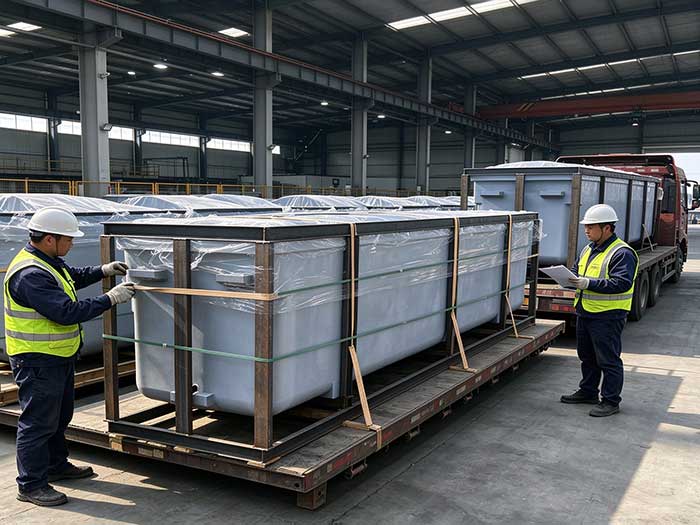
Packaging: Steel frame combined with stretch film prevents collision damage for large‑size cells; heavy‑duty tooling fixtures are applied for oversized units.
Delivery: Goods are inspected in‑house before shipment. Delivery schedule can be aligned with project milestones. Oversized cargo is transported by flatbed truck and handled via forklift or hoisting gear.
Production is managed in compliance with ISO and CE system requirements. Factory inspection covers appearance, dimension and sealing check. Actual field performance is subject to medium composition, operating temperature, maintenance practice and foundation installation conditions.
FAQ
Q1: What kinds of electrolytes are compatible with FRP Electrolytic Cell?
A: It fits most acidic and alkaline electrolyte systems. Compatibility evaluation is required based on electrolyte composition, concentration and operating temperature. Special media such as fluorine‑containing solutions and strong oxidizing agents need technical assessment for proper resin selection.
Q2: Can non‑standard sizes be manufactured?
A: Custom dimensions are supported. Please provide inner cavity dimensions, lifting lug layout, inlet/outlet nozzle position, electrode arrangement and on‑site space constraints for custom design. Standard specifications are also available for reference.
Q3: What is the expected service life of FRP Electrolytic Cell?
A: Service life is highly dependent on medium concentration, temperature, operating parameters and routine maintenance. Longer service cycles can be achieved under designated operating conditions with proper maintenance. Higher corrosion or elevated temperature will shorten service duration. No universal fixed lifespan can be promised. Technical assessment will be provided during project communication.
Q4: What are the differences between FRP cells and conventional concrete electrolytic tanks?
A: FRP cells feature lighter weight and pre‑fabricated delivery for less on‑site installation work, plus better electrical insulation and smoother inner surface against sediment build‑up. Nevertheless FRP materials have temperature limits; material performance will be impaired beyond permissible temperature range. Condition‑based selection is necessary.
Q5: Will leakage occur on FRP Electrolytic Cell?
A: Integral moulding and optimized sealing reduce joint‑related leakage risks. Potential leakage may result from foundation settlement, heavy impact or operation beyond design limits. A level foundation and avoidance of heavy physical impact are required for proper operation.
Q6: What regular maintenance is needed?
A: Periodically inspect surface for cracks or seepage traces. Carry out internal cleaning according to production cycles. Do not operate beyond designed temperature and medium limits. Contact our technical team promptly for abnormal conditions.
Q7: Is on‑site installation guidance available?
A: Technical documentation can be provided. On‑site technical support is also available upon project request, subject to commercial agreement.
Q8: What is typical lead time for orders?
A: Lead time varies with standard‑/custom‑built scope and order volume. Confirmed delivery schedule will be offered during commercial negotiation.
Q9: How are large‑size FRP Electrolytic Cells protected in transit?
A: Large‑volume units are secured in custom steel transport frames wrapped with protective film. Hoisting gear or forklifts are recommended for loading and unloading to avoid corner and surface impact.
Q10: What does the warranty cover?
A: Warranty applies to manufacturing‑related defects. Damages caused by physical impact, off‑spec operation or foundation settlement are excluded. Detailed warranty terms shall follow signed commercial contract.
If you want to customize fiberglass products or solve your company's storage, anti-corrosion and other industry problems, Shengte Technology is your first choice.
Tel: 86 13831860303
Email: 13831860303@126.com
Address: 598 Fuyang East Road, Jizhou District, Hengshui City, Hebei Province, China